top of page


Game Systems &
Prototyping in Unity
Exploring gameplay systems, mechanics, and interactive architecture through long-term prototyping practice in Unity

Mexico, Mexico City
Game Designer
Unity
Prototyping
8+ years
Project Snapshot
PROBLEM
Developing strong game design skills requires continuous experimentation, iteration, and direct interaction with gameplay systems beyond theoretical knowledge.
SOLUTION
An ongoing prototyping practice using Unity as both a game engine and a flexible interactive systems platform to design, test, and refine mechanics across multiple genres and formats.
RESULT
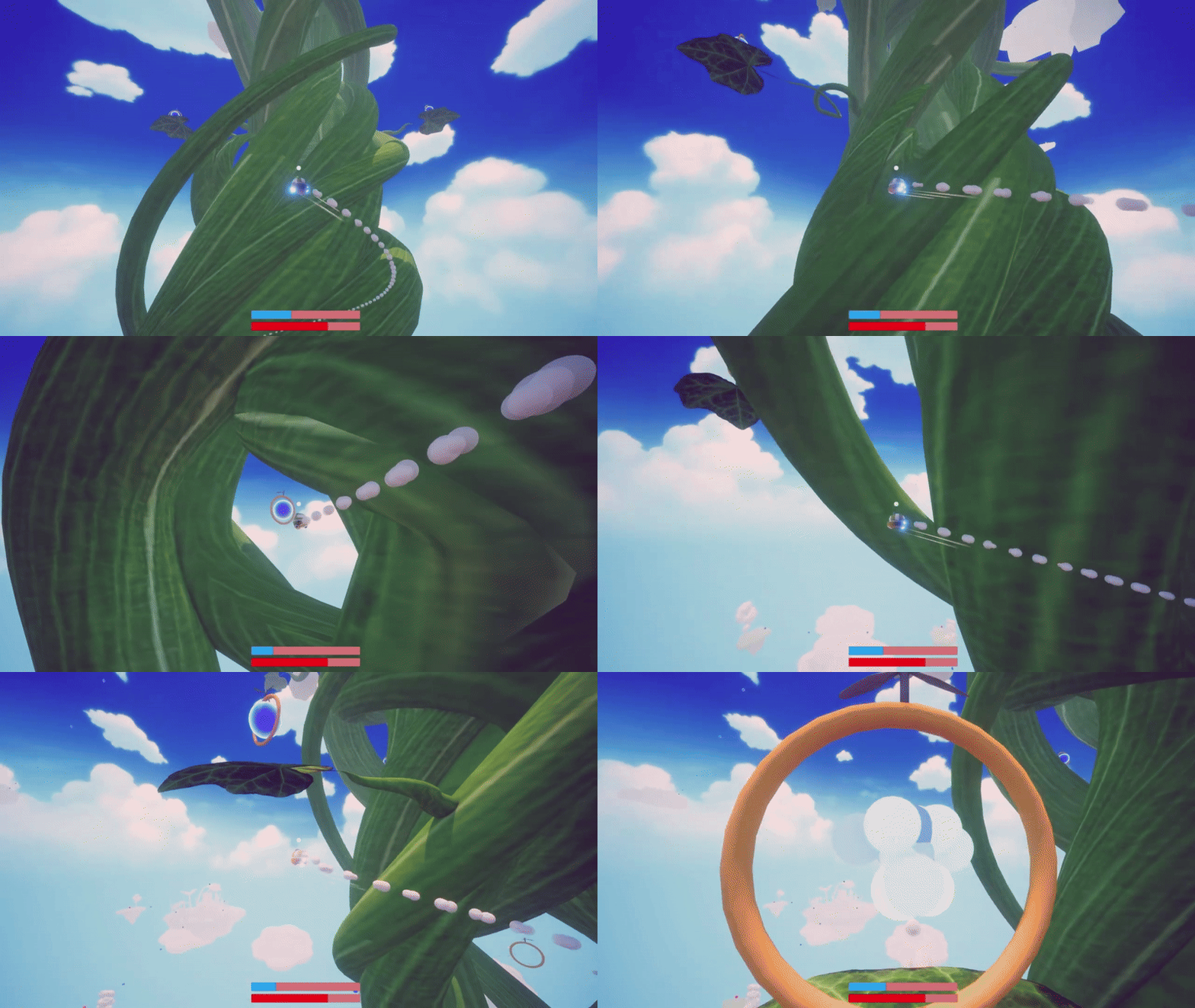
20+ interactive prototypes developed over more than a decade, ranging from traditional gameplay experiments to expanded interactive systems integrated into museum and installation environments.
Practice & Development
Designed and implemented gameplay systems from scratch using C#
Built core mechanics in both 2D and 3D environments across multiple genres
Developed player controllers, interaction systems, and progression loops
Iterated rapidly to test balance, pacing, feedback, and system behavior
Adapted projects to evolving Unity workflows and engine updates
Key Highlights
10+
Years working with Unity
20+
Interactive demos developed
Genres
2D - 3D - Puzzle - RPG - Action - Exploration
Gallery


Technical Notes
Unity
C#
Shader Graph
VFX Graph
UI Toolkit
< >
Integrated modular gameplay systems for scalable prototyping
< >
Transitioned from Legacy Input to the New Input System
< >
Migrated from Legacy UI to newer UI workflows
Impact

Strengthened systems thinking and gameplay architecture skills
Built confidence in rapid prototyping and mechanic validation
Expanded Unity beyond conventional gameplay use into interactive cultural and educational experiences
Learnings

Over nearly a decade of practice, Unity has become more than a development tool—it has become a creative laboratory. Continuous prototyping reinforced the importance of iteration, modularity, and clear system design when building interactive experiences.
Staying updated with evolving engine features, documentation, and community practices highlighted the importance of adaptability in a rapidly changing technological landscape. Transitioning between engine systems and workflows strengthened technical flexibility and long-term maintainability skills.
Participating in game jams further emphasized rapid decision-making, collaboration, and execution under time constraints—core abilities in both independent and studio environments.
Interested in game systems design, prototyping, or technical game development?
Let's work together


Discord username: coyoterobot
bottom of page